

As the Ducks approach their first conference game against Colorado, I am reminded of a story that is both tragic and triumphant all at once.
At the time I was in San Diego, California. I was just finishing Marine Corps boot camp the week before a game between Colorado and Oregon at Autzen Stadium. When I returned to Eugene, the news was everywhere.
Late in the game, trailing by 7 points, Colorado had the ball inside their own 30 yard line and needed to score a touchdown to tie the game. This was, of course, before overtime existed. A young sophomore who was second in the nation in receiving after a 10 reception game the week before, Ed Reinhardt was quickly becoming one of the best players in the old Big 8 Conference.
Reinhardt, from Heritage High School in Littleton, Colorado, was talented both on and off the field. Never one to take anything for granted, Reinhardt had a 3.5 GPA in high school and was a member of the Big 8 All-Academic team. With less than two minutes in the game against the Ducks, Reinhardt caught a short pass from Steve Vogel, turned up field turning that 6 yard hook into a 19 yard first down. The Buffaloes were marching. Reinhardt was tackled by Oregon safeties Dan Wilken and Jeff Williams. The tackle was clean, but as Reinhardt was going to the turf, his head hit the thigh pad of Wilkens before pounding to the turf.
Like many other players in the 80's, Reinhardt felt as if he had his bell rung a little, got up and went to the sideline a little dazed. But then his life changed. Shortly after returning to the sideline, Reinhardt collapsed. Thinking quickly a local neurosurgeon who also happened to be a Duck season ticket holder, Dr. Arthur Hockey rushed to the field to work with the 19 year old tight end.
Within 30 minutes, Dr. Hockey was operating on Reinhardt. The injury, though, was about the most traumatic you can get on a football field. Dr. Hockey remembers that the injury had a very high mortality rate; about 90% of people who were injured this way would die from the injury. Even if he lived, doctors speculated, he would most likely spend his days in a persistent vegetative state.
Ed Reinhardt, though, was a fighter. This was a young man who had worked hard to become a promising athlete. The Reinhardt family, far from wealthy, invested all of their love and passion into helping Ed recover from a devastatingly debilitating injury. On a trip to Arlington, Texas, Ed's father, Ed Reinhardt, Sr., learned of The Institutes for the Achievement of Human Potential in Philadelphia, Pennsylvania. This was a specialized facility dedicated to assisting people with brain injuries. But Ed's recovery would be no easy task. The founder of the institute, Dr. Glenn Doman, said at the time that Ed was in a very bad position. He was at a level below that of a child. He was unable to perform even the simplest task that a 6-month old toddler could perform. But Ed Reinhardt kept fighting.
As part of Ed's recovery, the family would travel to Philadelphia twice a year for special week long rehabilitation sessions. The doctors would discuss the treatment and progress with the family and look for possible new alternatives to his ongoing therapy. It was grueling at times, but Ed persisted and moved forward.
Everything, though, had to be re-learned. After 10 years of intensive rehab, Ed Reinhardt, once thought by doctors to have no chance at survival was able to do many things for himself. He could make his own bed, feed himself, dress himself; he could even talk a little. Most of his talking was short bursts. The injury had decimated his short term memory which made it difficult to form sentences. His recovery was inspirational enough that just 9 months after the injury, then President Ronald Reagan sent Ed Reinhardt a note congratulating him on his progress and efforts to reach out to others in need. Ed Reinhardt was succeeding at inspiring others. Sometimes our path is not what we think, but we must always persevere on the road of life.
That day, on the field, a blood vessel in Reinhardt's brain had burst. It was a parent's worst nightmare. But the family worked through the nightmare and used their experience to help others. To the family's credit, this was never about blame; they understood that blame would never make them whole, only love could make the family whole.
Today, Ed Reinhardt, now 46 years old, still lives with his parents, but is truly living a remarkable life. He walks, albeit with a limp. He gives inspirational speeches. He shows that the intelligence never left. He has to memorize speeches word-for-word because the short term memory fails him. Doctors say it is a miracle he survived. But the work ethic he showed to become a promising athlete with NFL aspirations paid dividends in a different field. He has acted in local plays; he sings in a choir. He can even throw a football around.
For those that do not remember, Ed's youngest brother, Matt Reinhardt played college football as well; a tight end for the University of Oregon from 1993-1995. Matt was only 10 years old the day his brother was injured in the game against Oregon.
The Reinhardt's never thought of suing anyone. They were extremely touched by a visit from Wilken and Williams while Ed lay in Sacred Heart Hospital. They knew from the look in the players eyes that they were just innocent young men playing the sport; in some ways, they were victims too.
This week, as the Oregon-Colorado game approaches, Colorado fans are sure to be reminded of Ed Reinhardt's amazing recovery and his family's legacy. Ed Reinhardt shared a room on road trips with current head Coach Jon Embree.
What began as a life threatening injury, became a 62 day coma and a lifetime of rehabilitation. The family, though, has no regrets. They have lived the life they were given and used that life to help others. September 15 marked 27 years since that fateful day in Eugene. What was Ed doing that weekend? Playing catch with a kid at the park. Yeah, he was throwing left-handed instead of right-handed, but he was throwing that ball.
As became the family mantra and title of his father's 2004 memoir; you're okay kid.
He sure is.
Opinion: In The Hands of Man
“Everything is good as it leaves the hands of the Author of things; everything degenerates in the hands of man.” From a simple statement grows a strong opinion about the state of athletics and our places as fans. The pressure of winning is intense; more now than ever. Coaches are paid exorbitant amounts of money to do just that; win. And we cheer for them to win. We hope that whatever it takes to win is legitimate enough to not cause real trouble. And when we roll in the mud with hogs, we are bound to get some dirt under our nails. Everything degenerates in the hands of man.
Breaking Down Match-Ups
Each week during the season, I will take the time to break down the match-ups at each position group for both the Ducks and their opponent. A unique look at which team has the edge at each position as well as an overall preview of the match-ups.
Feature Articles
Every week I will bring new feature articles for the reader to get to know the Duck Empire just a little better. The Duck Empire is vast and complex, these stories will bring you inside the lives of other Duck fans.
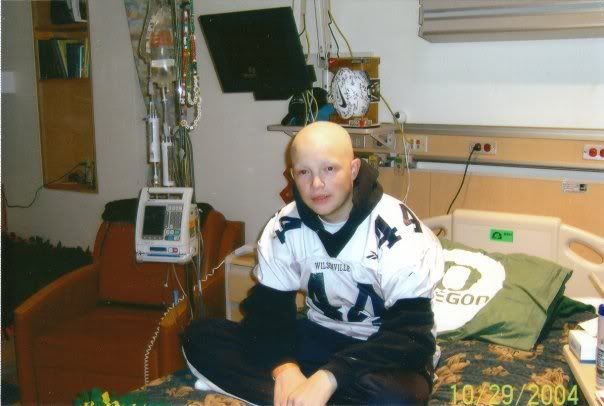
Exclusive Stories
We are always working to bring you breaking news and exclusive stories. The Other Side of Duck was the only Oregon member to interview Lache Seastrunk after his transfer. We are working on future exclusive stories and will work non-stop to bring you the very latest news.
The Other Side Of Duck
We are here to bring you a side of Duck sports that no one else brings. There are two sides to every story, our goal is to bring you the side of the story less discussed. In addition, we will continue to provide more content than responses to other stories. Original content, exclusive interviews, strong opinions and feature articles.
Showing posts with label Feature Articles. Show all posts
Showing posts with label Feature Articles. Show all posts
Tuesday, October 18, 2011
Wednesday, October 12, 2011
As I Lay Dreaming
A fictional tale of a life in and out of sports. This story is told in the first person. Any resemblance to persons real or imagined is unintentional.
As children, slipping off to sleep, we all had dreams; thoughts of life yet to be lived. For some, those thoughts centered on a life ordinary; for some, on a life less ordinary. Dreams are what shape our conscious minds from within the subconscious. There is little rhyme or reason to why one child may have differing dreams than his sibling in the same room. Yet, there they lay, sharing the same walls; the same windows and the same roof with dreams as divergent as night and day.
From my earliest memories, it seems the competitive nature that derives from the deepest segment of human nature, survival, seemed to control my world. "Everything, I do" I thought to myself, "I must be the best."
In retrospect, this just is not a feasible concept. Or is it? Should we not always try to do our best? If our goal is not to be the best that we can at whatever we try, aren't we failing ourselves? During football season especially, I often ponder this thought and remember a childhood with many great memories, yet full of the disappointments of not always being the best.
Were those days really wasted? Was all that time spent attempting to achieve something nearly unattainable nothing more than a lifelong exercise in futility?
These are all tough questions for a contemplative man who wants to always find the silver lining. If indeed those days were truly wasted, what is it I am left with?
Let me explore those thoughts some more. Though I was always attempting and dreaming of being the best, I was, in fact, learning important life lessons. It is not possible to be the best at everything you do. In fact, it is highly unlikely that any individual will be the best at what they choose. There is only one Michael Jordan. His success took the combination of genetic fortune, dedication, belief and hard work. And, even then, luck was involved. What if he had lived in Nebraska where basketball took a back seat to football? Would he have been the best ever basketball player? Would he have been a football player instead?
There I was a skinny kid, living in a small Midwestern town of less than 5000 people dreaming of a life less ordinary; a life of sports. In those days, though, less was known about exercise science. A skinny kid was skinny and would likely always be skinny. I didn't care; I was going to be the exception. So, I persevered.
And, this is where I start to see a positive light when looking back. In this world, no one will give you anything. If you want something it must be earned. Even the best athletes in the world have to spend countless hours dedicating themselves to their craft. Michael Jordan did not become a great basketball player by dreaming about it; he became great by playing. Failure is not missing a shot. Failure is not learning from a mistake. A missed shot is a learning opportunity. No one plays a perfect game. There are always things that you could have done better.
This is the lesson that I learned from athletics. As I continued to work and move towards my dreams, I made changes; bad choices; bad decisions. I learned from each of those and continued moving forward. By always having a goal, a competitive desire, there was rarely a reason to look back on life and be dismayed about the success I did not achieve. Instead, I was still moving forward, focused on the success I could have if I just kept working harder and smarter.
Sure, there are things I wish I could take back. Like the year of school that I skipped as a sophomore. That set my life back more years than I can count. My entire senior year of high school was lost making up for that missed time. And the girl I skipped it all to hang out with? Never saw her after high school. Was that really worth my lost time? The pessimist would say no, it was not. But, I am far from the pessimist.
In my senior year of high school, one where I was taking seven classes in day school, four classes at night, delivering newspapers in the morning, working in a gym in the afternoon, doing homework at 10:00PM after night school was over, sleeping for 4 hours and then getting up and doing it all again, I learned more about myself than anyone else I know. I learned just how hard I could push myself.
I almost gave up on my original dream; I originally wanted to play college football. During the first part of my sophomore year, after transferring schools two weeks into the school year and missing most of football season do to transfer and practice rules, I was approached by the cross country coach. As I could not play football, I gave cross-country a shot; and I was good. Lettered as a sophomore. The dream began to change. The Olympics?
Distance running was not in my blood, though. I enjoyed the sport, but I loved football. During that tumultuous senior school year, I managed to find time to lift weights during lunch. By the end of December, I had put on 30 pounds of muscle. Suddenly, people thought I might have a chance. However, because of the sophomore choices, I had to take a different route.
(Next Week: Part II-The story continues)
As children, slipping off to sleep, we all had dreams; thoughts of life yet to be lived. For some, those thoughts centered on a life ordinary; for some, on a life less ordinary. Dreams are what shape our conscious minds from within the subconscious. There is little rhyme or reason to why one child may have differing dreams than his sibling in the same room. Yet, there they lay, sharing the same walls; the same windows and the same roof with dreams as divergent as night and day.
From my earliest memories, it seems the competitive nature that derives from the deepest segment of human nature, survival, seemed to control my world. "Everything, I do" I thought to myself, "I must be the best."
In retrospect, this just is not a feasible concept. Or is it? Should we not always try to do our best? If our goal is not to be the best that we can at whatever we try, aren't we failing ourselves? During football season especially, I often ponder this thought and remember a childhood with many great memories, yet full of the disappointments of not always being the best.
Were those days really wasted? Was all that time spent attempting to achieve something nearly unattainable nothing more than a lifelong exercise in futility?
These are all tough questions for a contemplative man who wants to always find the silver lining. If indeed those days were truly wasted, what is it I am left with?
Let me explore those thoughts some more. Though I was always attempting and dreaming of being the best, I was, in fact, learning important life lessons. It is not possible to be the best at everything you do. In fact, it is highly unlikely that any individual will be the best at what they choose. There is only one Michael Jordan. His success took the combination of genetic fortune, dedication, belief and hard work. And, even then, luck was involved. What if he had lived in Nebraska where basketball took a back seat to football? Would he have been the best ever basketball player? Would he have been a football player instead?
There I was a skinny kid, living in a small Midwestern town of less than 5000 people dreaming of a life less ordinary; a life of sports. In those days, though, less was known about exercise science. A skinny kid was skinny and would likely always be skinny. I didn't care; I was going to be the exception. So, I persevered.
And, this is where I start to see a positive light when looking back. In this world, no one will give you anything. If you want something it must be earned. Even the best athletes in the world have to spend countless hours dedicating themselves to their craft. Michael Jordan did not become a great basketball player by dreaming about it; he became great by playing. Failure is not missing a shot. Failure is not learning from a mistake. A missed shot is a learning opportunity. No one plays a perfect game. There are always things that you could have done better.
This is the lesson that I learned from athletics. As I continued to work and move towards my dreams, I made changes; bad choices; bad decisions. I learned from each of those and continued moving forward. By always having a goal, a competitive desire, there was rarely a reason to look back on life and be dismayed about the success I did not achieve. Instead, I was still moving forward, focused on the success I could have if I just kept working harder and smarter.
Sure, there are things I wish I could take back. Like the year of school that I skipped as a sophomore. That set my life back more years than I can count. My entire senior year of high school was lost making up for that missed time. And the girl I skipped it all to hang out with? Never saw her after high school. Was that really worth my lost time? The pessimist would say no, it was not. But, I am far from the pessimist.
In my senior year of high school, one where I was taking seven classes in day school, four classes at night, delivering newspapers in the morning, working in a gym in the afternoon, doing homework at 10:00PM after night school was over, sleeping for 4 hours and then getting up and doing it all again, I learned more about myself than anyone else I know. I learned just how hard I could push myself.
I almost gave up on my original dream; I originally wanted to play college football. During the first part of my sophomore year, after transferring schools two weeks into the school year and missing most of football season do to transfer and practice rules, I was approached by the cross country coach. As I could not play football, I gave cross-country a shot; and I was good. Lettered as a sophomore. The dream began to change. The Olympics?
Distance running was not in my blood, though. I enjoyed the sport, but I loved football. During that tumultuous senior school year, I managed to find time to lift weights during lunch. By the end of December, I had put on 30 pounds of muscle. Suddenly, people thought I might have a chance. However, because of the sophomore choices, I had to take a different route.
(Next Week: Part II-The story continues)


Wednesday, September 28, 2011
In The Shadows of Greatness Part III: Character and Integrity
 |
| John Walls with his mother |
While John was undergoing intense chemotherapy in an attempt to rid his body of cancerous bone marrow, he had received some particularly painful news; none of his family were marrow matches. Realizing just how difficult a bone marrow transplant was without donors, John and his family organized a bone marrow donor drive in Wilsonville.
These drives are critically important to young people, like John, searching for a bone marrow match that might save their lives. Donating bone marrow is not as simple as donating blood. The procedure is considerably more difficult to the donor. As each of us strolls through our lives focused on so many things we feel important, we walk by people every day that may someday need our help. We just do not know it yet.
You will hear people talk around football teams about overcoming adversity. There is merit on the football field, or any place where competition occurs, to teaching life lessons to athletes competing in sports. The young men we cheer for on Saturdays learn how to persevere through pain; through disappointment; through adversity. They learn this through athletics.
Though the lessons are very important, they are meaningless without practical application. John Walls had spent his life around athletics and had learned incredible integrity. The one thing we all take for granted, though, is what role adversity might play elsewhere. While we are focused on our own problems and how to solve our daily travails, we are failing. No matter how well we seem to solve our own difficult circumstances, we are missing out.
On July 13, 2004,even as he was waging war against a body rebelling against him, John's family had a bone marrow donor registry drive organized in Wilsonville. Over 100 people showed up that day to add their name to the registry as marrow donors. Considering the size of Wilsonville, this was an incredible number. We will never know how many people those 100+ donors may have helped, but we do know that without John's presence, this would not have happened.
When I write to John the next day, here is what I told him:
John, keep up your amazing strength and spirit. It's what
you have inside your heart and mind that determine where you
will go... for over 100 people to show up in your honor
yesterday just shows how strong your presence in Wilsonville
is... there is so much support and love here...
Muhammed Ali was the guest of honor at the All Star game
last night and it reminded me of something he once said
about what makes a champion...
Champions are made from something they have deep inside
them-a desire, a dream, a vision.
John, you ARE a champion so keep that dream; that vision
that you have deep inside yourself... never lose the focus
on what your goal is... to kick AML's butt... you can do it
with the heart of a champion and the courage of a gladiator
you can come out on top... always, always BELIEVE
Just a couple of weeks later, as fall football camp opened up for Wilsonville High School, John was really starting to hurt; he was missing his first football season. Not yet 15 years old and a sport he had loved for so long was taken away from him; he was handling it as best he could, but he still wanted to play.
I communicated frequently with John through his website. AS he was feeling the pain of missing football for the first time, I tried my best to offer some solace in his battle.
John,
There may be no glory in the battle itself, but there WILL
be glory in the victory. I know your mom talks about how
wonderful this community is....it's the reason many of us
moved here and the reason we all stay.
There are so many people that make this community the palce
it is and without them, we would all be in trouble. John,
just remember that to win the tough games, you have to keep
battling. When the legs get tired and your focus starts to
wane, that's the time to bear down and re-energize your
focus onto your goal. Right now the goal is kicking AML's
butt to the curb.
Trust in your dreams and make them your goals.
As always LiveStrong and STAY Strong!
Live Strong and Stay strong
Three days after this, John went into remission. We were all in shock, had he beaten leukemia in just three months? That is a difficult question to answer in the moment. With all of our hearts, we all wanted to believe that the battle was over; John had won. But reality has a way of slapping you in the face if you become too complacent. Remission is not victory, there was still a LONG fight ahead for John and the rest of his family.
 |
| John Walls just before completing chemo, 2004 |
John began to see a return to normalcy, and he was excited.
It is trivial, in most cases, to compare anything like a game to real life. John was facing real struggles. Yet, we must keep in mind that even on the field, the lessons that can be taken away are critical. One of the most amazing aspects of John's battle with leukemia was the incredible community support John and his family received.
It seems that the only time people band together is in the face of tragedy or in times of accomplishment. What can be learned from both instances might be how important a social community still is to our existence. In The Aesthetic Beauty of Football and Social Capital and Football I addressed this concept. John's story shows how the concept becomes reality; one person, one community at a time. I also wrote about Strength Coach Jim Radcliffe in a piece called Strength In All the Right Places.
Though those articles were specific to football, there was, hopefully, a life lesson; one of great importance. John's story, though far from over, brings those three concepts together. John's story shows how the beauty of sport and social nature of our existence can combine to create a better existence. But without strength in the right place, it is all meaningless.
The beginning paragraph of David Calmers' "The Conscious Mind: In Search of a Fundamental Theory:" states:
Conscious experience is at once the most familiar thing in the world and the most mysterious. There is nothing we know about more directly than consciousness, but it is far from clear how to reconcile it with everything else we know. Why does it exist? What does it do? How could it possibly arise from lumpy gray matter? We know consciousness far more intimately than we know the rest of the world, but we understand the rest of the world far better than we understand consciousness.
What is it about John Walls that made the difference in so many lives? Simple: he had strength in the right place. We applaud strength and speed on the field. But strength of character, integrity and strength of mind are the strengths that make a difference int he world. At only 14 years old, John Walls displayed a strength of character, integrity and mind that many adults lack.
Let us learn from John. With every cheer, remember John's courage. With every bad moment, remember John's battle. As we leave the stadium, remember John's strength. John Walls knew what he was facing and yet he fought with every fiber of his being. He did not let his mind take over; he was able to control his consciousness with a singular determination to beat leukemia.
Every day, I am reminded of this battle. I wear a Livestrong bracelet that has been on my right wrist since May 2004. Each time I look down, I am reminded of John's strength and courage. Nothing can take that away.
At the end of every note I wrote to John, I ended with Live strong and STAY strong. That has a practical application to our lives and our fan-ship. Stay strong in your integrity.
Next up: A Return to Normalcy
Monday, September 26, 2011
Lyles Hurt His Own Players

This was not the only trip funded by Lyles. If you read through the recruiting stories you will note that Evelyn Seastrunk also visited USC and LSU on unofficial visits. In addition to those visits, she was present for the official visit to the University of California at Berkley.
In questioning whether Lyles helped or hurt, the fair point was brought up about the impact that this might have on the players. To his credit, Lyles attempted to minimize the impact on Seastrunk by asking that Seastrunk be given immunity from any wrongdoing. Nonetheless, Oregon officials were aware of the extra benefits received through Lyles and were advising him to pay back the amount he received two-fold.
It should be further telling that the NCAA has not yet ruled on the hardship waiver after the transfer.
In the past few months we have seen several cases where athletes received money through mentors, specifically Sharif Floyd of Florida and Damiere Byrd of South Carolina. Due to extenuating circumstances, Floyd had a four game suspension reduced to two games while Byrd served a full four game suspension. And that appears to be the magic number; four games.
Lache Seastrunk transferred to Baylor after one season in Eugene. He arrived on campus the week of Baylor's first game. After his arrival on campus and admission into Baylor University, paperwork was submitted to the NCAA asking for a hardship waiver of the NCAA transfer rule that would have allowed Seastrunk to play this season. There were some insiders who thought there would be news of the waiver request last week, but as of this moment nothing has been determined by the NCAA.
Late last week, in private conversations, the possibility was raised that there would be no "official" word of the hardship waiver until after Baylor's fourth game; that there was a four game suspension in place and that the waiver would likely be granted after the four game suspension was completed. That may still be the case; time will tell.
But this brings us back to the intent of the original article; did Lyles help or hurt the players with whom he was working? All along, Lyles has professed he simply did not understand all of the rules and that he had good intent. Now, however, there can be no doubt that Lyles knew this was a violation. Even the least knowledgeable on NCAA bylaws knows that schools cannot wire money to "mentors" to pay for unofficial visits.
The innocent "dupe" label must now be stripped away from Lyles. He was never innocent in this and his intent was never pure. Lyles admits he kept the extra $53 from this transaction. What else did he receive and keep? That is a fair question to ask now.
How did Lyles pay for the trips to LSU, Auburn (three unofficial visits), USC and the official visit to Cal? How did Lyles pay for the trip he took to Hawaii to watch Seastrunk play in an All-Star game? As a scout, he received just $36,000 for his own scouting service. Where did he get the rest of his income? These are all fair questions now.
This also brings new light back to Gary Campbell's statement when Evelyn found out Oregon would not pay for her to visit during Seastrunk's official visit.
Evelyn Seastrunk was very high on LSU for Lache; he had a cousin that attended LSU and the family was from Louisiana. There is no word how they afforded a trip for Evelyn, Lache and Lyles to go to the LSU camp. But we know that she later became contentious with Oregon Running Back Coach, Gary Campbell, when he would not fly her to Oregon for Lache's visit.
“I don’t know how he got there, but I know Lache’s mom didn’t come to Oregon and she was pissed at me because we didn’t bring her up here and everything. We couldn’t do it and we told her there was no way that we could bring her in. We didn’t do that and I don’t know what other people did.” Campbell said.
There are still a LOT of layers to uncover with this story. Will Lyles has a new story every time someone asks for more information. At this point in time, what I have been told is that Oregon did not pay for any trips for Lache Seastrunk or his family. Time will tell, though, the real truth. One thing I think can be said for certain, Will Lyles knew he was violating NCAA rules when he accepted money from a coach for an unofficial visit.
To smugly say he was only trying to help these young men is now a joke. To blatantly violate NCAA rules knowing that if caught, those very players would be ineligible in no way helps anyone but Will Lyles. When this is all over, Will Lyles does not have to give anything back. Will Lyles is not suspended. Will Lyles took away the dreams of young men for one reason: money.
It is time for the NCAA to re-write the rule book regarding scouting services. This time, there should be a department created responsible for overseeing recruiting and scouting services. As part of their responsibility, the department should create a registry of acceptable services. No university should be permitted to purchase services from any provider not on the list.
It is time to clean up the mess. Will Lyles says he didn't know the rules. This incident proves he most certainly did know the rules. Will Lyles did not care about any of the players he "mentored." If he cared, he would never have put them in this position. He would have done the research and made sure to keep them away from NCAA violations.
Sadly, it looks like Lyles cared about no one other than Will Lyles
Thursday, September 22, 2011
On Notice: An Interesting Development
SOUTH CAROLINA ALLEGATIONS
Lost in all of the realignment talk this week is a notice of allegations. Surprised? Did the NCAA go from inquiry to allegations in less than a week? No. This was a notice received by the South Carolina Gamecocks.
In a trend that the NCAA has seemed to crack down on this past season, this involves (mostly) impermissible housing benefits. What started as a single incident at LSU with Akiem Hicks has gone around the nation to Boise State and now back to South Carolina. This is a startling trend as it appears many places may be arranging for athletes to get significantly reduced living costs.
In LSU’s case, there was one player. In Boise State’s case there were 63 players involved and nearly five thousand dollars. South Carolina is accused of arranging for 10 of it’s football players and two members of the women’s track team to stay at an exclusive hotel for 25% of the regular cost (based on NCAA determination of a normal cost for the 2 room suites that the athletes stayed in). The total value of these extra benefits is $47,000. The compliance department at South Carolina were aware of the arrangements and signed off on the housing. That helped to bring about a “failure to monitor” allegation against the Gamecocks.
In addition to the housing extra benefits provided to the players, there were players who received over $8,000 in extra benefits from Student Athlete Mentoring Foundation. The President of the company, Steve Gordon, and treasurer Kevin Lahn are both South Carolina graduates who paid these benefits to several players. Among the benefits provided was funding to freshman receiver Damiere Byrd for an unofficial visit. Byrd is currently serving a 4 game NCAA suspension for accepting $2,700 in extra benefits. In total, the NCAA has accused South Carolina of providing $55,000 in extra benefits.
How, exactly, does this deserve mention in an Oregon blog? Simple, it is clear from the level of these violations that the amount of extra benefits provided to South Carolina far exceeds the payment Oregon made to Will Lyles and Complete Scouting Service. Yet, the media seems more intent on the issue surrounding Oregon and their use of recruiting services than they do about this growing problem of extra housing benefits. Extra housing benefits started with Reggie Bush. Schools got smarter, but the benefits still violate NCAA bylaws.
What Oregon is being investigated for, at this point, is nowhere near the level of these extra benefit investigations. There is no indication, yet, that Oregon provided a dime in extra benefits to players. It is clear from the manner in which the NCAA has proceeded that this investigation has been centered on Will Lyles and whether Oregon willfully paid for access to players. So far, every person I have spoken with (save for one person whose service was canceled by Oregon in favor of Lyles) denies that this was the intent of the payment. There is no indication from family, friends or coaches that any recruit who visited Oregon was provided with any extra benefits.
What does this mean? Well, for those that are still worried, look no further than the punishment handed down to Boise State. Wait for the punishment handed to South Carolina. Their allegations include tens of thousands of dollars (in South Carolina's case) to dozens of players (in Boise State’s case) across a several year period. While Boise State received somewhat harsh penalties, they were nowhere near the level of Southern California. If history is an indication, expect in the neighborhood of 2-3 scholarship reductions for 2 years as well as probation and other minor penalties to come South Carolina’s way in the future.
This will bode well for any potential sanctions against Oregon. Though it looks very slimy on the surface, the alleged violations by Oregon are not nearly as significant as those at Boise State and South Carolina. The violations they committed were not nebulous and there was no gray area in the definition. The athletes received housing at considerably under the prevailing rate for the room.
BRIAN BERGER-CHIP KELLY UPDATE
Last week, Brian Berger, 750 The Game host of “The Sports Insider” alluded to “more information” about Chip Kelly. In doing some research and contacting a few sources, including athletic department personnel, here is the only thing I can conclude; Berger’s reference is not going to be some “shocking” revelation.
Currently there is a story being developed regarding Terelle Pryor’s recruitment. Because Oregon was involved late in attempting to have Pryor come out for a visit, Chip Kelly, Pryor’s primary recruiter, will be mentioned in the article. Though it is doubtful there will be much to talk about from a violations standpoint as Pryor never actually visited Oregon.
Members of the coaching staff and athletics department are still very confident that Oregon has not violated any major rules. President Lariviere has stated privately that Chip Kelly’s job is not in jeopardy.
What, then, could Berger be alluding to in his statement? What I have been told is that the big time boosters, outside of Pat Kilkenny and Phil Knight, have said that when the recruiting story first broke, there was unanimous support that Chip was safe regardless of outcome. Recently, however, these boosters have said that, while they support him currently, if a darker truth than what we have been led to believe comes out, that Chip no longer has 100% support of the boosters.
This is not big news, really. It has been speculated for a while now that if Kelly is found to have committed violations along the lines of Jim Tressell boosters and fans would support a change in leadership.
Unfortunately, like many stories surrounding the Oregon football program, Berger will turn it into more of a faction of boosters that want him fired; and he will say it is presumed that there is a deeper problem. This is not true. Do not buy what Berger sells as it is simply an exaggeration of what is happening.
As previously stated, other coaches currently on staff still fully believe that there were no major violations. University of Oregon President Lariviere stated that Kelly’s job is safe.
At this point, based on ongoing investigations into other programs and the penalties handed out recently to LSU and Boise State, there is even more reason for optimism for Oregon fans. The recruiting service scandal does not rise to the level of $55,000 in extra benefits at South Carolina. The scandal is not as pervasive as the multiple year, 63 players provided extra housing benefits at Boise State. Barring unforeseen violations discovered in the process of this investigation (which I am told there is nothing major by sources inside the athletic department), any violations found to have occurred will incur less than the penalties at Boise State.
At this point, I think it is fair to say that Oregon fans once on the edge of their seat expecting bad news and the NCAA hammer to fall can take a deep breath and enjoy the rest of the season. Anything that might be coming down the pike will be minor in comparison and should not affect recruiting much, if at all.
Wednesday, September 21, 2011
In The Shadows of Greatness Part II:
Fighting Together
When adversity strikes the member of a group, the group has only two choices; fragment and fall apart, or grow closer together and make the whole greater than the sum of it's parts.
John Walls was in 8th grade when he was diagnosed with leukemia yet many expected him to play varsity as a freshman; he was that good. More importantly, as Wilsonville was still a fairly small, tight knit community in 2004, the high school players knew John and they knew his father Ned. Ned Walls is a hard guy to miss. Ned played offensive line at Central Washington, stands around 6'3" and weighs in the neighborhood of 300 pounds. As a police officer, his presence was known to all in Wilsonville.
John could either become a distraction or a motivation. In life, you just never know which way people will respond; especially high school kids who sometimes find it difficult to face the concept of mortality. Empathy is a difficult task for young teen-aged boys to grasp.
I am reminded that the Ducks faced a similar adversity. On July 13, 2008, heralded defensive back recruit Todd Doxey, on an outing with his team mates, jumped into the McKenzie River. Also not worrying about human frailty, Doxey was not using a flotation device. Just a few hours later, Doxey was pronounced dead at McKenzie Willamette Hospital in nearby Springfield.
This was a stunning blow to many of his team mates that could have ripped apart the fabric of the team. In mid 2008, many people thought maybe the team had lost focus. The Ducks floundered a bit during the middle of the season as it struggled to find it's identity. Nonetheless, by the end of that season, the Duck football team began to gel finsihing the regular season with a blowout victory over arch-rival Oregon State. The victory spoiled the Rose Bowl Dreams of Beaver players and fans.
The win did something more, though, it taught a team what it could do when faced with adversity.
A large core group of Doxey's signing class were vital components in two consecutive Pac-10 Championships. The team that went to the Rose Bowl and the National Championship Game were heavily influenced by the class of 2007. Players like Casey Matthews, Kenny Rowe, Terrell Turner, Drew Davis and Jeff Maehl were all members of that signing class. They drew together through adversity... but none would ever forget their fallen team mate.
Maehl, who had become very close with Doxey, has Todd's name, date of birth and date of death forever tattooed on his arm. Every time you saw him tap his side and point to the sky after a touchdown? That was a direct sign to Todd Doxey. Todd's last words to Maehl were "God is on my side." Maehl points to his side to honor Todd Doxey.
The 2004 Wilsonville Wildcats were in a strange place. They were including a team mate who could not play in all of their preparations. John was as much a part of that team as anyone; but there was a difference, John's number was on their helmets; the season had been dedicated to John and his fight.
I once told John of the perfect analogy from the 2004 Tour de France:
The Wilsonville football team approached the season with a similar focus and determination. Their coach, George Crace, did a masterful job of reminding them of the humility that kept them grounded while directly confronted with human frailty every day. Every day they put on their helmets they were reminded that their friend; their team mate, was fighting a much more difficult battle than they could ever face. No opponent on the field could ever be as fearsome as John's opponent. And John was fighting like a mad man; like a full back ramming his way into the end zone, John was determined to beat leukemia.
Much like Oregon used adversity to grow stronger and reach heights no one knew possible, Wilsonville also reached a major plateau. The school did not exist until 1995. In 2004, Wilsonville capped off a perfect season with a 37-13 victory over arch-rival Sherwood in the State Championship game. They won with John Walls by their side.
In remembering Todd Doxey and the impact his death had on the team, Danny O'Neill said "His [Doxey] death affected the other players in a very deep way. I think myself and others were surprised by the response of the players, not just at the memorial service. Jeff [Maehl] still talks about it. Todd Doxey is not the first player to die in a program [but] not all programs have responded in such a way."
Two teams faced with a similar circumstance, both achieving extraordinary heights in honor of their team mates. But John Walls was alive to fight, his number forever emblazoned on the helmets of his team mates; and his fight would be incredible.
 |
| John Walls with George Crace during 2004 Championship Season |
John Walls was in 8th grade when he was diagnosed with leukemia yet many expected him to play varsity as a freshman; he was that good. More importantly, as Wilsonville was still a fairly small, tight knit community in 2004, the high school players knew John and they knew his father Ned. Ned Walls is a hard guy to miss. Ned played offensive line at Central Washington, stands around 6'3" and weighs in the neighborhood of 300 pounds. As a police officer, his presence was known to all in Wilsonville.
John could either become a distraction or a motivation. In life, you just never know which way people will respond; especially high school kids who sometimes find it difficult to face the concept of mortality. Empathy is a difficult task for young teen-aged boys to grasp.
I am reminded that the Ducks faced a similar adversity. On July 13, 2008, heralded defensive back recruit Todd Doxey, on an outing with his team mates, jumped into the McKenzie River. Also not worrying about human frailty, Doxey was not using a flotation device. Just a few hours later, Doxey was pronounced dead at McKenzie Willamette Hospital in nearby Springfield.
This was a stunning blow to many of his team mates that could have ripped apart the fabric of the team. In mid 2008, many people thought maybe the team had lost focus. The Ducks floundered a bit during the middle of the season as it struggled to find it's identity. Nonetheless, by the end of that season, the Duck football team began to gel finsihing the regular season with a blowout victory over arch-rival Oregon State. The victory spoiled the Rose Bowl Dreams of Beaver players and fans.
The win did something more, though, it taught a team what it could do when faced with adversity.
A large core group of Doxey's signing class were vital components in two consecutive Pac-10 Championships. The team that went to the Rose Bowl and the National Championship Game were heavily influenced by the class of 2007. Players like Casey Matthews, Kenny Rowe, Terrell Turner, Drew Davis and Jeff Maehl were all members of that signing class. They drew together through adversity... but none would ever forget their fallen team mate.
 |
| Maehl pays tribute to Doxey after scoring. (Getty Images) |
The 2004 Wilsonville Wildcats were in a strange place. They were including a team mate who could not play in all of their preparations. John was as much a part of that team as anyone; but there was a difference, John's number was on their helmets; the season had been dedicated to John and his fight.
I once told John of the perfect analogy from the 2004 Tour de France:
Wow... if today's stage at the Tour de France isn't the
PERFECT analogy for so much that happens in life. It was,
quite literally, an uphill battle. Because he was the
leader, Lance started last in this uphill time trial; two
minutes behind the 2nd place rider.... Lance passed him
going up hill.... when he did the other rider (an Italian
named Basso) looked over but Lance kept his focus on what
was MOST important... what was ahead of him... he didn't
even glance at the other rider... he ended up demolishing
everyone in the stage all but assuring himself of the
overall win...
With the same grit, stamina, attitude and belief, John, you
can win your race...
Live strong, STAY strong and always believe!
The Wilsonville football team approached the season with a similar focus and determination. Their coach, George Crace, did a masterful job of reminding them of the humility that kept them grounded while directly confronted with human frailty every day. Every day they put on their helmets they were reminded that their friend; their team mate, was fighting a much more difficult battle than they could ever face. No opponent on the field could ever be as fearsome as John's opponent. And John was fighting like a mad man; like a full back ramming his way into the end zone, John was determined to beat leukemia.
Much like Oregon used adversity to grow stronger and reach heights no one knew possible, Wilsonville also reached a major plateau. The school did not exist until 1995. In 2004, Wilsonville capped off a perfect season with a 37-13 victory over arch-rival Sherwood in the State Championship game. They won with John Walls by their side.
In remembering Todd Doxey and the impact his death had on the team, Danny O'Neill said "His [Doxey] death affected the other players in a very deep way. I think myself and others were surprised by the response of the players, not just at the memorial service. Jeff [Maehl] still talks about it. Todd Doxey is not the first player to die in a program [but] not all programs have responded in such a way."
Two teams faced with a similar circumstance, both achieving extraordinary heights in honor of their team mates. But John Walls was alive to fight, his number forever emblazoned on the helmets of his team mates; and his fight would be incredible.
 |
| Wilsonville Helmet with John Walls number |
Tuesday, September 20, 2011
A SCREECHING halt to Expansion?

From the beginning, Pac-12 Commissioner Larry Scott has preached equality. In selling the Los Angeles area teams on the concept of Expansion 2010, Scott was able to garner a major concession from the two power brokers: equal revenue sharing. In doing so, Scott laid the groundwork for the most lucrative television deal in college football history. Along the way, the then Pac-10 flirted with the concept of a Pac-16.
During an 11th hour bargaining session, Texas took a concept gleaned from their discussions with Scott and tried to get rich on their own. They brokered a deal that temporarily salvaged the Big 12. However, in order to make that deal, they were able to convince nine other schools (after the defection of Colorado to the Pac-12 and Nebraska to the Big 10) that they deserved a larger share of the pie. They were further able to convince the league that, though the Big 10, SEC and Pac-12 now all had their own league-wide networks, the Big 12 did not need one; only Texas would need a network. How they were able to convince people of this is beyond me, it just does not make sense.
Fast forward a year, and the Big 12 is about to implode all because Texas felt it deserved a larger share of the pie. They squeezed everyone out. And that angered some folks in College Station. So much so, that they decided to leave and let everyone else fight amongst themselves.
This set off a frenzy. Texas, being Texas, though, continued to look for a partner willing to let them keep their own network while taking an unequal proportion of the conference television money. What they have found; no one is willing to sell their souls to the Texas Longhorns. First the ACC told them thanks but no thanks. Now the Pac-12 has told them they are not interested in their bloated expectations.
At this point, Texas is left scrambling to mend fences. The conference they have nearly destroyed for two consecutive years is in shambles. Oklahoma was set to leave taking Oklahoma State with them. Missouri, they were likely gone too leaving four teams with nowhere to go...
Where does the conference go from here? Your guess is as good as mine. They probably look to add 3 teams with the promise of better paydays to get back to 12 teams. My guess would be looking to add BYU and two of their old Southwest Conference members, Houston and SMU. But as long as Texas gets a bigger share of the revenue pie, these problems will continue. Until Texas is willing to cede control of the Longhorn Network over to the Big 12, the Big 12 is going to lack any stability. At this point, Oklahoma's demand for a new commissioner is a prudent move; the times have passed Beebe. What the conference should have done last year is looked for a conference network that allowed a Texas Sports Network but not controlled by the Longhorns. Instead, they gave the keys to a Lamborghini to a driver so enthralled with speed that they forgot to look for other cars. What resulted is a crash of almost epic proportions.
Monday, September 19, 2011
On Notice

What these constant critics do not seem to understand is that NO time would be considered a "good" time. If you announce it in the middle of the week, the critic will say it is being done to "bury the story" before the game. The sad truth is, there are just some people who you just cannot satisfy.
Further making their sniping even more trivial is the fact that even the least rational fan; the myopic fan who thinks nothing happened, knew that this day was coming. This day is not a surprise. As Mullens said, this is the next step in the process.
The question now becomes, what will the NCAA think of this sordid affair when all is said and done? This is like a messy divorce with both parents accusing each other of child abuse. And, in reality, there was likely no abuse of the children; just an abuse of each other.
Will Lyles is a man who has been in this game for a long time; he knows what he is doing. For him to call himself "naive" and say that he just "should have known the rules better" is, simply put, disingenuous. Lyles knew the rules and he played tonsil hockey with them right under the noses of the distrustful parents. In a conversation with Lyles' former employer, I was told that "I told him [Lyles] a long time ago on three different conference calls with my partner that eventually his way of doing things would catch up to him."
If that is true, it begs another question; if his employer says he "knew" Lyles wasn't doing things the right way, why did he continue to employ him? In truth? Simple, this business is slimy. All around; recruiting is and always has been a slimy part of college football that very few people ever actually see first hand.
To be fair, though, it is not entirely slimy at every level. When I was at Lewis & Clark College, a Division III school in the Portland area, I sat in the room and discussed recruiting with the football coaches. I was there for visits. Nothing I saw there was along the level of Division I powerhouse recruiting. Recruiting information was purchased and kids were called. From the initial call, relationships were built.
I was also at the University of South Dakota and witnessed plenty of recruits on campus; met with them as they were introduced to the Strength & Conditioning program. As an Assistant Strength & Conditioning Coach, I saw a lot of first hand recruiting relationships. There was nothing all that slimy there.
Not true at the SEC, Pac-12, Big 10 level. The football programs at these schools are BIG business. There is more truth to movies like "Blue Chip" and "The Program" than many people realize. We see the movies and assume them to be dramatized fiction. And, they are, to a degree. However, as with most dramatizations, there IS an element of truth underlying the fiction.
When people wrestle in the mud, no one's hands are clean. Will Lyles knew what he was doing. Chip Kelly had some idea what this gray area entailed. In the end, though, this is not paying extra benefits to anyone; this is not paying for a recruit. Though many would like to make the case, it just is not true. The truth is something we may never fully know. What we know now, however, is that at the end of this process, there will likely be some form of penalties.
BOISE STATE RULING A REASON FOR HOPE?
I think, though, that the NCAA ruling on Boise State can give some solace to Duck fans. Unless something else is discovered during the NCAA investigation, the infractions assumed certainly do not rise to the level as those at Boise State. This does not involve extra benefits to DOZENS of athletes. This does not involve multiple sports all being investigated simultaneously. This is a football matter that involves only a few athletes who had relationships with a scouting service. It involves a violation of one bylaw:
13.14.3 Recruiting or Scouting Services. An institution may subscribe to a recruiting or scouting service involving prospective student-athletes, provided the institution does not purchase more than one annual subscription to a particular service and the service: (Adopted: 1/1/02, Revised: 1/16/10)
(a) Is made available to all institutions desiring to subscribe and at the same fee rate for all subscribers;
(b) Publicly identifies all applicable rates;
(c) Disseminates information (e.g., reports, profiles) about prospective student-athletes at least four times per calendar year;
(d) Publicly identifies the geographical scope of the service (e.g., local, regional, national) and reflects broad-based coverage of the geographical area in the information it disseminates;
(e) Provides individual analysis beyond demographic information or rankings for each prospective student-athlete in the information it disseminates;
(f ) Provides access to samples or previews of the information it disseminates before purchase of a subscription; and
(g) Provides video that is restricted to regularly scheduled (regular-season) high school, preparatory school or
two-year college contests and for which the institution made no prior arrangements for recording. (Note: This provision is applicable only if the subscription includes video services.)
13.14.3.1 Effect of Violation. Violations of Bylaw 13.14.3 and its subsections shall be considered institutional violations per Constitution 2.8.1; however, such violations shall not affect the prospective student-athlete’s eligibility. (Adopted: 8/5/04)A couple of points on this. Recently Lyles has stated publicly that LSU attempted to violate the main part of this bylaw by purchasing the "Junior College Package" to avoid purchasing more than one annual subscription to a particular service. And this is where Lyles' attempts to implicate everyone else around him to appear the innocent victim become clear. His reasoning for saying LSU paid for the Junior College Package are incorrect. He says that they "already had a Texas" package from another scouting service. But the bylaw does not say you cannot purchase from two different services for the same region, but that you cannot have more than one annual subscription to a particular service. In that regard, I think LSU escapes his charge.
Boise State was given 3 scholarship reductions per year for three years for a pattern of violations much more extensive. They were given this with the dreaded "Lack of Institutional Control" hanging over their heads. Do not expect Oregon's penalties to be worse, expect any potential sanctions to be lighter as far as scholarships are concerned. I think that the impact of sanctions will not be in scholarships, but recruiting visits. I would expect, when all is said and done, for the Ducks to have their number of allowable recruiting visits to be reduced for a year, for Chip Kelly's allowable off campus recruiting to be reduced for some portion of time and for the Ducks to lose maybe a couple of scholarships total over 2 years.
My final expectation is that the NCAA will completely re-write the rules regarding Scouting Services. And, if you think there are a lot of schools that hate Oregon now, just WAIT until they see the new rules that Oregon helps to write. They will NOT be favorable to a lot of different places.
(Note: The above is an opinion piece only and does not reflect the opinions of the NCAA, University of Oregon, Duck Sports Authority or any other entity.)
Wednesday, September 14, 2011
In The Shadows of Greatness
The Beginning: StayStrong
As Duck fans left Dallas, many of us felt down; defeated. Perspective.
In a world where our every step seems calculated and pondered far in advance, the most important thing any one person ever does is build relationships. How we build those bonds is the true measure of our character. How we nurture them is the truest measure of our maturity. The impact of these bonds is our truest reward. John, you have more people than any one person could hope for supporting you and your family, this is the true power of your impact on your community. The willingness of so many people to step in and include you in their prayers, even those who have never met you, shows just how deep those bonds have been planted. When you think about the immense size of our planet, it is encouraging to know that so many people can care so much about one person.
Through each day, your support system grows ever larger. Take strength from their sheer numbers. The power of the mind can never be fully understood. Your mind is more powerful than your body can ever fathom. I have lived my life in the pursuit of physical strength, but without the power of belief, I would be nowhere. Believe in your recovery. Fight tooth and nail. Remember, it is often the second and/or third effort on the football field that gets the first down or touchdown. Like Jimmy Valvano said… “Don’t EVER give up.” Stay strong.
Thus began a life changing experience for me. The year was 2004, my oldest son was preparing to move from junior high to high school. I had coached both he and my younger son for many years in every sport they played. Layne, however, had moved on from sports and was more interested in academics.
 |
| John Walls, June 2005 |
Much like he had done with football, John put his head down and plowed forward; he vowed to beat leukemia.
From these very early words I had spoken to him a new motto came to life: LiveStrong and STAYstrong. This was a life lesson as it went far beyond athletic strength and was more important to strength of mind and character. John was only 14 years old; this was supposed to be a time of great joy and excitement; he was going to high school.
Yet, there he was, lying in a hospital bed, fighting a tougher opponent than most of us have ever had to face; and he did so with the stubbornness and defiance most of us can only dream about. John was more mature in that moment than anyone I had ever been around.
Sure, maybe his stubborn refusal to give in to leukemia was nothing more than a fear of the consequence of giving in to the disease. But, knowing John, and knowing his family, that just is not the case in my mind. John was young only in chronology; his mind and body were far beyond that of most 14 year old boys.
John fought the disease incredibly. Any one of us would have been proud if he were our child. John was a classmate of my son; the son of a man with whom I volunteered as a coach; and there I was feeling proud that such an incredible young man existed.
The Duck football team has lived to fight another day. They faced a setback head-on. They came back to win a game. But, much like John's battle to beat leukemia, the battle cannot be won in a week, or a month. As we progress through this season, there will be more adversity.
John Locke once said, "I have always thought the actions of men the best interpreters of their thoughts."
John Walls, through his actions; courage, fortitude, character, trust and generosity showed exactly what he is inside. John has an incredible support group willing to step in and offer their support. These range from all of his family, to his friends, to people who are like an extended family.
Though his father is a die-hard Husky fan, John, just the tad bit on the rebellious side, was all Duck. When they learned of John's plight, star football player fighting leukemia, Mike Bellotti and Joey Harrington responded and visited with him at Doernbechers. They were merely responding to his character. I told him, "ALWAYS keep character and you will be surrounded by even more character." Every message I left ended with the same phrase: "As always stay strong."
This is the first thought of this series; stay strong. Strong of mind, body and character and you will go far.
As we progress through the season, each Wednesday, I will take you along the journey of John Walls' fight against leukemia. From the heartache of no family bone marrow matches, to remission, to the relapse and finally a bone marrow transplant and beyond. It was through John Walls that I first became acquainted with the folks at Duck Sports Authority. John changed my life in many ways. I hope he changes yours as well.
Monday, September 12, 2011
Did Will Lyles Help or Hurt Players?

Late last month I received word from a source that is familiar with athletic department policy regarding potential sanctions for individual players. However, due to my inability to verify NCAA protocol in this instance, I chose not to report the information.
Today, however, I received confirmation about NCAA policy.
This is not regarding institutional sanctions. Rather, this information deals with individual players and the policy surrounding benefits that they may have received from third parties during the recruiting process.
I was told that players who received any monetary or other compensation from Will Lyles would be asked to pay back any funds he provided during their relationship two-fold to a charity of their choice. I could find no NCAA precedent regarding this type of benefit, so chose to not report such information until I could verify the accuracy of the information. Though the source was very trustworthy and I had no doubt that it was true to some extent, I still was not sure about how much would be required to be paid back under the circumstances.
Friday, however, it was revealed that Sharif Floyd, a standout Defensive Tackle for the University of Florida, would have to sit out at least 2 games and make arrangements to pay back over $2,700 of benefits he received from an organization called Student Athlete Mentoring Foundation which is a non-profit organization based in Delaware. Though Floyd, who lived in poverty after leaving home at the age of 15, used the money for necessary living expenses, the NCAA determined that his receipt of the money constituted “preferential treatment.”
From the perspective of the NCAA, they reduced a possible 4 game suspension in half due to the extenuating circumstances. In a statement Friday by the NCAA's vice president of academic and membership affairs, Kevin Lennon said, "We examine each situation carefully and consider all elements related to a student-athlete's individual circumstances and the violation. This gives us the flexibility to tailor the conditions of reinstatement that take into account all details and are in the best interest of the involved student-athlete." This brings little consolation to Floyd and Florida coach Will Muschamp.
From the perspective of the NCAA, they reduced a possible 4 game suspension in half due to the extenuating circumstances. In a statement Friday by the NCAA's vice president of academic and membership affairs, Kevin Lennon said, "We examine each situation carefully and consider all elements related to a student-athlete's individual circumstances and the violation. This gives us the flexibility to tailor the conditions of reinstatement that take into account all details and are in the best interest of the involved student-athlete." This brings little consolation to Floyd and Florida coach Will Muschamp.
Unfortunately, this case has set the precedent and further explains much of the delay in the Will Lyles investigation. LSU receiver Russell Sheppard was suspended for four games for speaking to a teammate about the questions he was asked about Lyles. Trevon Randle, a 2011 LSU signee from League City, Texas, is known to have had a relationship with Lyles. Randle has been quoted as saying:
“He (Lyles) kept giving us info about different schools,” Randle told FOXSports.com in January. “Made sure people wasn’t leaving. Types of coaches they had. Some of those coaches didn’t come down here. He would maybe call and talk to them because he knows a lot of coaches. … He was just the info guy.”Later in the interview, Randle said, “He was looking after me.”
Sources have confirmed that Lyles provided assistance with unofficial trips to several students. In addition, Lyles provided meals and other benefits to these prospective student athletes during their recruiting processes. There is no indication that any school had direct knowledge that Lyles was paying for their trips or providing any other benefits to the athletes other than Lyles arriving with the athletes in tow. It is known that several players close to Will Lyles took unofficial visits to LSU, Auburn, USC, and Cal amongst other schools.
Among the players known to have made unofficial visits to LSU it is known that Randle made two unofficial visits to LSU. His first visit, February 20, 2010 for LSU Junior Day proved enough for Randle to commit to play for LSU. Later Randle attended the summer camp for LSU in June.
The NCAA must look into each individual case and determine the level of benefit received and make individual determination regarding eligibility and reinstatement of each athlete on an individual basis. This will take quite some time for the NCAA to unravel as Lyles was involved with many players. Do not expect a quick resolution to this aspect of the investigation which is separate from the investigation of the schools that paid Lyles for his recruiting services.
From an Oregon perspective, what I have been told is that none of Lyles' clients were provided with funds for themselves or family members to visit Oregon. This does not, by itself, exonerate Oregon in the Will Lyles investigation, but it does ensure that there is little chance that Oregon will be implicated in providing extra benefits to players through Lyles for unofficial visits. Nonetheless, there is a very good chance that the very young men Lyles was attempting to help will end up paying a bigger price than any of them expected.
As the situation develops, and we receive more information, we will keep you updated.
Tuesday, September 6, 2011
The Backpedal Two-Step
It has been "formally" announced by the athletic department that Tennessee is still scheduled to play in Autzen.
Are we really supposed to believe that someone told Chip Tennessee was backing out of the game if it was not true? Not likely.
Here is the likely scenario, Tennessee has talked to Oregon A.D. about canceling the game, but is trying to minimize their buyout clause. Recognizing that the loss of this game will likely cost Oregon a great TV game (ESPN) the Ducks are not going to let Tennessee wiggle out without something in return. Either there will be a much later return date OR there will be a buyout and deal with ESPN to get a regional game in place of that contest regardless of opponent.
I sincerely doubt Tennessee is coming to Autzen as scheduled.
Are we really supposed to believe that someone told Chip Tennessee was backing out of the game if it was not true? Not likely.
Here is the likely scenario, Tennessee has talked to Oregon A.D. about canceling the game, but is trying to minimize their buyout clause. Recognizing that the loss of this game will likely cost Oregon a great TV game (ESPN) the Ducks are not going to let Tennessee wiggle out without something in return. Either there will be a much later return date OR there will be a buyout and deal with ESPN to get a regional game in place of that contest regardless of opponent.
I sincerely doubt Tennessee is coming to Autzen as scheduled.
Monday, September 5, 2011
The Fan Perspective

Saturday’s game. It does NOT take a genius to offer up grades, analysis and critique of the game. In fact, in some ways, looking at that side of Saturday’s story is rather pedantic. Instead I want to offer up a different perspective. First up: The fans.
I have heard throughout the Pac-12 conference that Oregon has some of the most boorish fans around. As I walked around Saturday, I just cannot imagine that to be anywhere close to true. I have been, in the last two seasons, to Tennessee, the NC Game against Auburn and now this game against LSU. I have been to Corvallis and Seattle. I cannot imagine a lower class, trashier fan base than LSU. There simply is a class divide
that is based on age group; but not gender. Do not get me wrong. I ran
across plenty of classy LSU fans. For those people,I am grateful. However, they are being dragged down by a younger generation of fan. Their younger generation makes the cast of Jersey Shore look downright elegant.
I am fortunate, I am 5’10” and weigh 240 pounds of power lifter muscle; not
too many people are willing to start trash with me. But I saw some
pretty despicable Tiger fans. Men? Women? Children? Did not matter. The
trash that they were transcended gender or age. In the end, I probably
saved the life of some drunk female LSU fan who tried to pick a fight with
a 300 pound male Duck fan… I broke up several fights in my own section.
LSU fans and alumni should take no pride in the way their fans represented
their institution; they were, in a word, disgraceful to the human race. In all honesty, and this will cause much heartburn to many people, but, from my personal perspective, the LSU fan base, as a whole was the worst fan base I have ever experienced. Texas, Oklahoma, Oregon State, Washington, Auburn, Tennessee all carried themselves better, as a whole, than the LSU fans. As I previously said, there were plenty of GOOD LSU fans; we even tailgated next to some great fans that were very respectful. Unfortunately, the great people we met were overshadowed by those who were less than great.
While walking back to my car after the game, head held high, I spoke with Hal, a longtime fan and LSU graduate. He admitted that, while the fans his age were all pretty dignified, that there is a large faction of the younger generation who have no real ties to the university, but prefer the obnoxious side just for the sake of being obnoxious. As we parted he thanked me for speaking with him and wished me well. His last words to me were "I am sorry that some of our lower trashier fans put us all in such a negative light." I simply told him not to worry about it, we get to choose those who impact us the most and I will let his example be the one that frames my thoughts of that night. In 30 years, this game will be a faint memory. His uncompromising respect and dignity will stay with me longer.
As a final note on fans here, I implore Oregon fans that read this to represent us well wherever you may roam. There are people making judgments about all fans, our state and our beloved Ducks based on your actions. Represent us with
dignity and class. Do not sink to the level of the trash I so unfortunately encountered.
To those LSU fans who tailgated next to us, as former members of the Tiger
Band, you represented your university well and should take great pride in
your class. Sure wish some of your comrades had the same level of class
and dignity! Thank you for a great time!
On a brighter side, my friend Gwen, from the Dallas area, really showed us some great things about Texas life on Friday night. Some authentic Texas BBQ at North Main BBQ in Euless followed by “Friday Night Lights” at the game between Southlake Carroll High School and L.D. Bell high school. There is nothing more impressive than seeing 25,000+ people pack the stands of a HIGH SCHOOL football game; truly an impressive sight. Throw in an even more impressive video replay scoreboard and you have a stadium that is better than many college stadiums. Plus, it was fun to be back at a high school game.
 |
| Southlake Carrol Dragon Stadium |
Finally, it was almost surreal as I took my tour of Cowboy Stadium, affectionately dubbed “Jerry World.” The facility was amazing in just about every aspect. The locker rooms, though very nice, were not even comparable to Oregon. The tour hosts were shocked to learn just how
incredible Oregon’s facilities really are; we are lucky folks!
On my way out of the Pro Shop I was greeted with the most surreal experience as some Duck fans recognized me from the articles I have written about Lache Seastrunk. This, to me, was rather shocking. I was humbled and grateful for their acknowledgment. I simply followed my heart on a story and it has, seemingly, had great impact on Duck fans everywhere. I am simply glad I was able to bring you that story. The story deserved telling. As I was tailgating, I was introduced to more fans who had read the articles and wanted to meet me. Thank you so much to all those people willing to read my little words. I truly and sincerely appreciate your continued support.
I apologize for not having pictures of my meeting with Jerry Allen. I am not the “fanboy” type that even thinks about that, but it was a great experience nonetheless.
 |
| Braden and I outside Cowboy Stadium |
Wednesday, August 31, 2011
Pac-12 One and Done?

The speculation is already beginning that the Big 12 is one member away, now, from crumbling. Some believe that Oklahoma, which, by the very nature of it's relationship with Oklahoma State would almost assuredly include them in any proposed move, is about to jump ship and seek admission to the Pac-12.
This would allow Texas to save some face and not be the "team that destroyed the Big 12." At this point, that is all Texas has in this fight, a chance to save face. After all, it was their greed that nearly destroyed the conference a year ago; and it is their greed that has ultimately destroyed the conference forever. Texas, you see, has been humbled. A year ago, Texas fancied itself the new Notre Dame. A team with enough tradition, fan-base and fervor to go out on their own; but they still liked the benefits of being in what amounted to a cupcake walk towards a National Championship Game.
Unfortunately, along their path to surefire riches beyond belief, Texas found out that, outside of Texas, there was not a real demand for their new Longhorn Network. A year ago, the musical chairs that Texas played with conference politics was never really about leaving the Big 12. It was always about getting their own network and ensuring that the revenue was not distributed equally. In the ever changing landscape of college football, the best method of ensuring your place at the top is to have more money than the "other guy." Texas had successfully held the rest of the Big 12 hostage. Save for the departure of Nebraska, the Big 12, and Texas, had little concern over losing Colorado. Their hubris in believing that they could control the conference to their favor is likely the downfall of the conference.
Now, just a little over a year after the college football foundation was almost swarmed under by a tidal wave of realignment, it appears that the "Super Conferences" may come sooner than expected. And, when the dominoes start to fall, expect some major changes. College football conferences as we know them will be a thing of the past. There is a very real likelihood that the Pac-12 will be the Pac-16 by next year. And, if that happens, if the Pac-12 is a simple "one and done" conference before expanding again, expect the rest of the college football landscape to be drastically altered.
Good or bad, this change is going to happen. Probably just sooner than we thought. Hang on, folks, this may get a bit bumpy.
Tuesday, August 30, 2011
Social Capital and Football

To build bridging social capital requires that we transcend our social and political and professional identities to connect with people unlike ourselves. This is why team sports provide good venues for social- capital creation. (Putnam, 2000: 411)
Sport and social capital is a result of this proposition and others like it that suggestively position sport as an institution capable of creating substantial social capital. Even a cursory examination of public discourses that relate to sport and leisure reveals that politicians, academics, sport administrators, policymakers, journalists, athletes and commentators are convinced the idea that sport is a vehicle for the creation, development and maintenance of social capital is, at the very least, intuitively correct.
So begins the introduction to the book Sport and Social Capital (2008, Nicolson, Hoye). The book seeks to take a deeper, examined look into the connections between sport and what the authors call “social capital.” Social capital is defined as a sociological concept, which refers to connections within and between social networks. This concept details the importance of social connections and the crucial role cooperation and confidence play to attain economic results which benefit a collective rather than individual.
The explosion of college football over the last twenty years might be directly tied to this concept. Many commentators speculate about the lack of social interaction over this time frame, yet, at the same time, college football has exploded in popularity. Are the concepts of less personal social interaction and explosion of college football related?
I think the answer is yes.
As technology has advanced, our ability to communicate with one another has increased tremendously. While in South Dakota coaching, I was able to speak with family every night and see them through Skype, a free online video cam centered conversation. Skype is but a small fragment of our communicative ability. Look around, you will likely see men, women and children on a cellular phone. Twenty years ago, cellular phones were for the wealthy. Not so today.
At restaurants, you are likely to see husband and wife, sitting together, on their cell phones. Technology has advanced far beyond simple mobile phone calls to having these hand held, small devices, also act as portals to the internet. This has been a boon to instant information. However, it has had a negative side effect; less personal interaction. That same husband and wife sitting together, transfixed on their portable devices barely speak to one another.
To create an illusion of interaction, there are many great tools we use. This has expanded to websites that allow us to communicate with a wide array of people with a few “keystrokes” on a keyboard. First there was MySpace, an online “social networking” site. This allowed people to create connections based on many factors. Facebook has changed the way we communicate to not only our friends, but with others that might share a common interest and little else. With “status updates” people frequently broadcast their feelings on broad subject matter to hundreds, even thousands of people at a time.
This is not really interaction, though. Human beings are inherently social by nature. While social networking allows us to feel connected to others briefly, it does not give us that one-on-one, face-to-face communication that we deeply need to maintain our social bonds.
Enter sports.

As discussed in the Aesthetic Beauty of Football, sport has an appeal to people for many reasons. Certainly people are attracted to a wide variety of different sports for a multitude of reasons. On a more basic level, however, people are seeking others with whom they can share a common bond. The appeal of college athletics is that there is a built-in bond. We all grow up in the shadow of a major university. Most of us know someone who went to the same university. In smaller cities, like Eugene, this becomes a community. We feel a part of something when we share this common bond. Though I may like to lift weights and read philosophy with my free time; be more liberal in my political views. Steve, my long time “seat neighbor” at Autzen differs in just about every facet of his personal life. He is more conservative, works in an entirely different industry than myself and is not the avid power lifter like myself. Yet, after securing the Rose Bowl berth in 2009 with a victory over Oregon State, there we were, sharing high fives and hugging like two long time best friends. Form a football standpoint, we probably are like best friends. I have watched two young men who sit behind me grow from grade school kids to college graduates. Though you only see these people six or seven times a year, you feel like you know them.
Tailgating has become a natural off-shoot of this social bonding. To further enhance relationships built around a sport, we gather, prior to each game, to share talk of our common interest (football), food, drink and laughs.
So, while our daily lives seem to become less and less about personal interactions, our outside interests become more and more about seeking out people with similar interests. This is a great explanation for the existence of fan-centric websites devoted to a team and its fans. We desperately reach out to find others with common interests. We are so busy living our hectic lives; commuting long distances to work; working excruciatingly long hours; desperately striving to maintain what we have worked so hard to build; that we need the diversion. As we enjoy our diversions, we seek company. While it has been said that misery loves company, it can also be said that joy seeks company.
Think for a moment; when something brings you joy, do you really want to be alone? Or would you prefer to share that joy with others? I believe we want to share that joy with others. And, Saturdays at Autzen allow us that ability.
The growth of college athletics is directly tied to our diminishing personal contact on a daily basis. As our daily lives become more and more void of positive personal contact, our love of sport, particularly college sports, grows ever stronger.
And, in this, I find no reason to fear that growth. Embrace this as it only shows we are human. We seek social contact. Human beings are, at their core, social animals. Don't believe me? Look around this Saturday. People you have never met will interact with you after a great play simply because you share an affinity for a particular university.
For my part, people I have never met will come to a parking lot, eat food, drink beverages and laugh as we discuss Oregon Football.
This is proof, to me, that there is hope for the future.
Saturday, August 27, 2011
Manufacturing Consent and it's Impact on Oregon Athletics
Note: This is the piece I mentioned last week. It is quite long, is opinion in nature and does tie back in to Oregon sports and the purpose of this blog in the first place. It uses extensive quotes of Noam Chomsky. I do not ascribe, personally, to all of his political leanings. However, I find the content of his Manufacturing Consent fascinating. It is applicable to what I have to say here. Not all will agree with this viewpoint, do not let that affect your enjoyment of future Duck articles here on The Other Side of Duck. I felt that this was a unique concept for a sports blog. Enjoy!
 She is correct, columnists do have editors. But editors are expected to maintain content not based solely on journalistic integrity, but on what they are told is policy. Policy from a corporate level is not related to journalism. It is about what content will generate the readership that then allows the company to rake in advertising dollars. Do not get me wrong, here, either, I am not against a company making profit. However, when a company's profit is at the expense of news, we must be wary of the content that is presented to us for our knowledge.
Read on and I will keep working hard to keep trying to let everyone see the other side.
The world of journalism is seemingly living oblivious to their manufactured consent.
The petty attacks began on a Sunday. I had completed an interview and posted a story. The article was the culmination of countless hours of dialog, back and forth messaging and relationship building. Yes, I had built trust with a family and friends looking for a deeper story. From the beginning of the quest, I was as honest as possible about my original intent: there was none other than investigating a story from a different angle.
The original articles were simply a result of requests by fellow Oregon football fans for a place they could read my thoughts in a coherent string rather than intermittent thoughts on a message board. There was never a request, by me, my family or friends to have this be anything more than me sharing thoughts. A “blog” in today's world, is really nothing more than an on-line journal. The original entries represented a collection of thoughts in journal form.
It exploded from there as the information was passed along to a radio station, then began to get wider distribution. Unlike newspapers, radio programs and television stations, I was not “promoting” the subject matter. I was simply gathering the facts I had access to and providing that compilation to others who were likewise interested in the subject.
Then came a lucky break; having learned of some facts not widely known, I contacted the principles and asked questions. The answers I received were then chronicled in a third article. When the third article was released, there were more requests which I fulfilled as graciously as possible. I expected that the third would be the last in the series; hoped may be a better word! Then, less than two weeks later, word began to leak that the subject of the original stories, Lache Seastrunk, was considering a transfer from the University of Oregon. Once more, the story became news.
Out of respect to the family and friends of Lache, I asked for, and was granted an exclusive interview with Lache Seastrunk. The interview was not the result of some mythical friendship, but respect for the manner in which I treated the subject from the beginning. The interview and final article should have allowed Lache Seastrunk to move on with his life in a graceful manner.
But then, traditional media became somewhat inflamed by the response from other fans. One particular journalist took to insulting my own credibility. It was a rather petty and snide comment that many of the people who enjoyed the article took offense to; a twitter war of the words began on Sunday shortly after I posted the article.
I have never talked to Lindsay Schnell. I have never emailed her; never commented on one of her stories. Yet, Sunday night, within three hours of the story being posted she had this to say:
“It's good to hear all sides of a story, but I hope everyone realizes that Scott Reed has basically no credibility & is clearly NOT objective”
Why exactly does a “respected” journalist feel the need to bash a person who is just presenting his own thoughts on a blog? There are answers, and answers she probably is not even aware of. Most will slough it off as professional jealousy because this was the second time in less than a month that I had been able to get an interview that no one else could land. That in itself, might have been understandable, but to publicly criticize goes well beyond professional jealousy.
Traditional journalists are trained to protect their institution. It is not well recognized, but protecting their job is vital to their continuation. In the “internet era” anyone can get their thoughts out to the masses very easily. Most newspapers have adapted decently and made their online versions as available and instantaneous as any individual. Breaking news stories are posted within minutes of their beginning; newspapers have gotten very aggressive in being able to respond quickly to world, national, regional and local stories as the break. Gone, though, are the days where paying subscribers fund news organizations. In the 1970's and 1980's, television stations relied heavily on advertising revenue for their survival. Newspapers, though, were able to be more objective in their reporting as their funds were subsidized by paying subscribers. That has all changed.
MANUFACTURED CONSENT:
The Profit Agenda
Harold Laswell once said: “Dogma is a defensive reaction against doubt in the mind of the theorist, but doubt of which he is unaware.”
Lindsay Schnell is a relatively young journalist, still seeking to ensure the protection of her livelihood. She falls under Laswell's quote. Her reactions are against her own doubt, a doubt which she doesn't even recognize. As she grows in the profession and works toward advancing within a traditional news organization, the doubt will grow, and the awareness of the doubt will continue to dissipate.
Laswell continues on, “In what's nowadays called a totalitarian state, military state or something, it's easy. You just hold a bludgeon over their heads, but as societies become more free and democratic you lose that capacity and therefore you have to turn to the techniques of propaganda. The logic is clear—propaganda is to a democracy what the bludgeon is to a totalitarian state.”
What is Laswell referring to when he talks about propaganda? Simply put, he is referring to traditional media; they are the propagandists. At the lower reporter level, though, they are unaware. They are unaware because they are still blinded by an idealism of being the next “Woodward and Bernstein.” What they missed in Journalism school, though, was the underlying elitist mentality that was taught. Traditional journalists are taught to believe that, because they seek truth, they are better equipped to disseminate information.
Schnell shows her naiveté with another quote:
“Who is objective & has cred(ibility)? How about everyone who works for a real organization & doesn't have an agenda. Goe, Moseley, Schroeder, etc.”
Does Schnell really believe that these traditional, so-called, “real” organizations do not have an agenda? If so, she is much worse than just naive. But I will leave that for the reader to determine. In reality, Schnell works for The Oregonian; and The Oregonian has an agenda. First and foremost, the agenda of The Oregonian is to generate revenue and profit. In order to succeed, the newspaper must appeal to a wide variety of interests. Schnell, though, does not determine what is appealing, she simply submits her work to an editor who deems it's appropriateness before the story is released.
The Oregonian is part of a much larger conglomerate owned by Advance Publishing. All told, this organization owns 76 newspapers as well as multiple other magazines (including The Sporting News, GQ, Vanity Fair, Allure, Vogue, Golf Digest and a host of other “lifestyle” publications). Advance Publications is a media giant. Advance Publications, Inc., is a privately held communications company that, directly or through subsidiaries, owns Condé Nast Publications, Parade Publications, Fairchild Publications, American City Business Journals, the Golf Digest Companies; Advance Publications' subsidiaries also have extensive interests in cable television, as well as in Internet sites which are related to its print publications.
The Chairman of the Board and Chief Executive Officer of Advance is Samuel Newhouse, Jr. who is rated as the 47th richest person in America with a net worth of 6.6 billion dollars. He and his brothers inherited the business from the father, Samuel Newhouse, Sr. Neither graduated from college, but both are native New Yorkers and considered philanthropic in their support of Syracuse University. In fact, Syracuse School of Communication is fully titled “S.I. Newhouse School of Public Communications.” The school was founded with a gift in 1964 and named for publishing magnate Samuel Irving Newhouse Sr. In 2003, his sons provided an additional gift of $15 million to the school.
Let's not pretend, though, that the gift is purely philanthropic. Journalism has merged into large conglomerates and they answer to ONE thing: profits. The Newhouse family did not create tens of billions of dollars of wealth by angering their Board of Directors. And this is where the news business gets tricky.
When you start from the bottom of the food chain, the “beat” reporter answers to their departmental editor who answers up a chain to the main Editor in Chief and Publisher. The Oregonian Editor is Peter Bhatia, a Stanford graduate. He answers to his Publisher, N. Christian Anderson III, an Oregon State Graduate. These men, of course, answer to the Corporate office which answers to their Board of Directors. The directions of newspapers are determined by corporate objectives.
Further clouding the control newspapers have over content, is the control they manufacture over beat reporters. In many cases they are young, hungry and idealistic. But they have large debt to pay just like every other college graduate and, like the rest of us, need to pay their bills.
Very telling is this tweet from Schnell:

The Political Agenda
Further complicating the profit motive is the political agenda present in all media. Whether they like to admit to this motive is irrelevant, it exists. Noam Chomnsky tells us
We're talking primarily about the national media, those media that sort of set a general agenda that others more or less adhere to, to the extent that they even pay much attention to national or international affairs.
Now the elite media are sort of the agenda-setting media. That means The New York Times, The Washington Post, the major television channels, and so on. They set the general framework. Local media more or less adapt to their structure.
And they do this in all sorts of ways: by selection of topics, by distribution of concerns, by emphasis and framing of issues, by filtering of information, by bounding of debate within certain limits. They determine, they select, they shape, they control, they restrict -- in order to serve the interests of dominant, elite groups in the society. (Chomsky, 1992)
And this is the issue at hand with any and all criticism or critique from local media; they are merely responding to a challenge of the agenda as set forth by major media and followed along by local media. This is a very clever indoctrination into the belief that this is not actually the case.
To start with, there are two different groups, we can get into more detail, but at the first level of approximation, there's two targets for propaganda. One is what's sometimes called the political class. There's maybe twenty percent of the population which is relatively educated, more or less articulate, plays some kind of role in decision-making. They're supposed to sort of participate in social life -- either as managers, or cultural managers like teachers and writers and so on. They're supposed to vote, they're supposed to play some role in the way economic and political and cultural life goes on. Now their consent is crucial. So that's one group that has to be deeply indoctrinated. (Chomsky, 1992)
It is critical to the success of this model that journalists be deeply indoctrinated. It is fundamental that they not know they have been indoctrinated. Their idealism is key to the illusion that they are unbiased reporters working in a world where the truth is the ultimate objective. But it is not. The ultimate objective is far from what is truth. It's all about which part of the truth sells. Further belaboring this point is that the other eighty percent of society is, for the most part, desensitized.
Now there are other media too whose basic social role is quite different: it's diversion. There's the real mass media-the kinds that are aimed at, you know, Joe Six Pack -- that kind. The purpose of those media is just to dull people's brains.
This is an oversimplification, but for the eighty percent or whatever they are, the main thing is to divert them. To get them to watch National Football League. And to worry about "Mother With Child With Six Heads," or whatever you pick up on the supermarket stands and so on. Or look at astrology. Or get involved in fundamentalist stuff or something or other. Just get them away. Get them away from things that matter. And for that it's important to reduce their capacity to think. (Chomsky, 1992)
This is you and me; we are the ones that, typically, mass media aims to distract. Certainly I am not going to sit here and tell you that existence itself is some conspiracy theory of a few wealthy elite. However, what we call news is most certainly a controlled effort to maintain a certain “status quo” in this nation. There are very large publications, like The New York Times which some argue is the most important newspaper in the world. The Oregonian, for that matter, can be considered the most important newspaper in Oregon. At a state level, The Oregonian plays an extremely important role in shaping the perception of the current world on the part of the politically active, educated classes. Oregon history is what appears in The Oregonian archives. In 100 years, when most of us are gone, Oregon history will be to the future what The Oregonian says. With that comes a heavy burden the editors likely feel.
Because of this deep burden of presenting history, it is of the utmost importance that to ensure history is shaped in an appropriate way certain things appear, certain things not appear, certain questions be asked, other questions be ignored, and that issues be framed in a particular fashion. To be clear, it is critical to note that this has nothing to do with liberal or conservative bias.
What does this have to do with sports? Simple, sports is a very pivotal component of the aforementioned indoctrination system. Sports offers us something to pay attention to that is, in the long run, of little true importance. Sports keeps us from worrying about those things that truly matter in our lives; things that, without a preoccupation, we might consider the idea of doing something about. Think for a moment the amount of intellectual capacity everyday people use towards sports. Hell, I am doing it here! Listen to a call-in radio program and it is incredible to see the intelligence that is used by ordinary people in discussions of sports as opposed to political and social issues. These callers have the most exotic information and understanding about all kind of esoteric issues. The press most certainly has a lot to do with this.
Expanding upon this thought, the press needs to keep fans focused on a topic if they are truly shaping history. In the case of Oregon athletics, there is no doubt that local press has been shaping the history of Oregon for quite some time. Because Oregon has experienced unprecedented success in the sport most vital to a university, football, the history or Oregon athletics is inexorably tied to this success. The opinion makers recognize the need to divert attention to them, so they can continue to shape the rest of history. This is where negativity comes in to play.
Without a negative tint to Oregon athletics, Oregon fans might be inclined to start looking at the rest of history that The Oregonian is beginning to shape. Duck fans become very incensed whenever we see something negative about our team. Fans like me spend all of their free time looking for proof that these opinion shaping pundits are incorrect. We spend our time debating how to “quiet” these pundits. We think of exotic plans to boycott their paper, diminish their value. Does it really matter?
So what we have in the first place is major corporations which are parts of even bigger conglomerates. Now, like any other corporation, they have a product which they sell to a market. The market is advertisers -- that is, other businesses. What keeps the media functioning is not the audience. They make money from their advertisers. And remember, we're talking about the elite media. So they're trying to sell a good product, a product which raises advertising rates. And ask your friends in the advertising industry. That means that they want to adjust their audience to the more elite and affluent audience. That raises advertising rates. So what you have is institutions, corporations, big corporations, that are selling relatively privileged audiences to other businesses.
Well, what point of view would you expect to come out of this? I mean without any further assumptions, what you'd predict is that what comes out is a picture of the world, a perception of the world, that satisfies the needs and the interests and the perceptions of the sellers, the buyers and the product.
Now there are many other factors that press in the same direction. If people try to enter the system who don't have that point of view they're likely to be excluded somewhere along the way. After all, no institution is going to happily design a mechanism to self-destruct. It's not the way institutions function. So they'll work to exclude or marginalize or eliminate dissenting voices or alternative perspectives and so on because they're dysfunctional, they're dysfunctional to the institution itself.
Now there are other media too whose basic social role is quite different: it's diversion. There's the real mass media-the kinds that are aimed at, you know, Joe Six Pack -- that kind. The purpose of those media is just to dull people's brains. (Chomsky, 1992)
This is The Oregonian. They are here to dull our brains. The reporters? Most of them are completely oblivious to their role. Most reporters are simply trying to create their own lives. They are, as stated before, idealistic. Any of those that enter into the system who have a divergent point of view are likely to be excluded at some point of their career. No institution will create the mechanics of their own self-destruction. Successful institutions do not function in this manner. Schnell, and her colleagues are willing participants in this system as designed. They have an institution to protect and will give their entire being to exclude, minimize or eliminate altogether dissenting voices and alternate perspectives because they are dangerous to the institution itself.
Now, to eliminate confusion, all of this has nothing to do with liberal or conservative bias. According to the propaganda model, both liberal and conservative wings of the media -- whatever those terms are supposed to mean -- fall within the same framework of assumptions.
In fact, if the system functions well, it ought to have a liberal bias, or at least appear to. Because if it appears to have a liberal bias, that will serve to bound thought even more effectively.
In other words, if the press is indeed adversarial and liberal and all these bad things, then how can I go beyond it? They're already so extreme in their opposition to power that to go beyond it would be to take off from the planet. So therefore it must be that the presuppositions that are accepted in the liberal media are sacrosanct -- can't go beyond them. And a well-functioning system would in fact have a bias of that kind. The media would then serve to say in effect: Thus far and no further. (Chomsky, 1992)
This is the state we find ourselves in as we read through The Oregonian. Most of the writers are unaware of the role they play. They simply do what they are told; write stories they know will get printed and let the editors shape the news how they see fit. This does not, though, reduce their culpability. These writers are intelligent people who have the capacity to see the manner in which their opinions have been skewed to shape perception, yet they are unable or unwilling.
Certainly the media will not agree with this theory. They will say Chomsky is nothing more than an anarchist who is beyond just a liberal. And, they would be right in their characterization of Chomsky as an ultra-liberal. But that does not change the truth of this matter. That is just another diversion from the truth. They will turn your head by focusing on an extraneous factor. After all, if you are focused on your disdain for Chomsky's political leanings, you will be less likely to see whether his concept of manufacturing consent is real or imagined. And, isn't that exactly what Chomsky predicts?
When it comes to Oregon athletics, just remember, these writers are part of a bigger issue. It is not they who shape the opinions that appear in the paper; it is the editors in response to publishers and their conglomerate owners. It is business that shapes their opinions. They just do not know it.
Our love of Oregon athletics shall not be diminished simply because a few writers are following their editorial policy. Yes, sports is a diversion. We are diverted for a reason and that is okay. The writing of a few writers following corporate directives cannot and should not diminish our love of Oregon athletics. Nor will I allow the rantings of a young, impressionable reporter to silence my voice. There is another side to the stories they write. I do not need an editor or publisher to “approve” my content. This is not as much a defense of my writing as a critique of traditional media's approach to constant criticism of dissenting voices. I am a dissenting voice. I am not a “professional” journalist, but that does not diminish the point of view I have. In fact, my status as an outsider strengthens my point of view!
The readers have also been insulted throughout this process. By insulting my writing, traditional media have also insulted the readers. They are saying, in effect, since my opinion does not matter, the reader is wasting his or her time reading what I have to say. Understand, seeking out divergent opinions is a GOOD thing. If we let The Oregonian or The Register Guard be the sole source of our knowledge, we play into their agenda setting role. Keep reading; do not let anyone tell you which voice is legitimate and which voice is void. Be the keeper of what you consider legitimate information. The readers of this blog are capable of determining their own reasonable truth. They are entitled to opinions from both sides of the fence.
Credentials as a journalist do not change any facts I have presented nor any conclusions the reader has reached. Everyone has a bias and/or agenda in their writing. This blog is called The Other Side of Duck for a reason; to put a forth a unique perspective that few get to see elsewhere.
Subscribe to:
Posts (Atom)


